Back to School Character: A Versatile Design Resource for Educational Projects
Designing engaging materials for the back-to-school season often involves striking a balance between visual appeal, practicality, and cost-effectiveness. Whether you are an educator preparing classroom decorations, a parent creating personalized stationery, or a small business owner developing seasonal marketing assets, the right design elements can significantly reduce preparation time. Among the many available resources, the Back to School Character design package stands out as a comprehensive solution, offering five distinct file formats tailored to different workflows. This article provides an objective evaluation of this design set, exploring its potential benefits, practical tradeoffs, and the specific scenarios where it may or may not align with your project goals.
What Is Back to School Character?
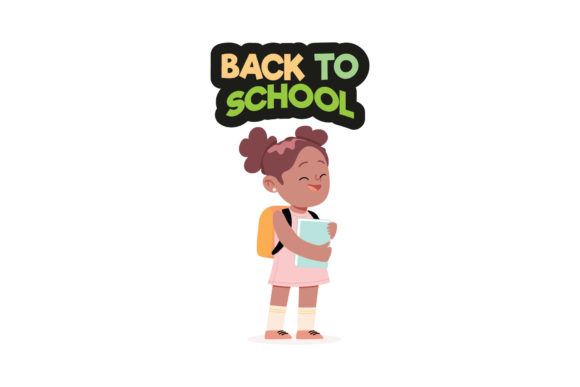
The Back to School Character is a digital design set centered on a school-themed character illustration. It is provided in five standard formats: AI (Adobe Illustrator), EPS (Encapsulated PostScript), SVG (Scalable Vector Graphics), JPG (JPEG), and PNG (Portable Network Graphics). The canvas size for each format is uniform at 1920 pixels by 1280 pixels, ensuring consistent proportions regardless of which file type you choose. This standardization simplifies resizing and integration into different projects, from digital presentations to printed handouts. The design is intended to be easy to use and editable, giving users the flexibility to adapt the character to their specific needs, whether changing colors, adding text, or combining it with other elements.
Why Consider Back to School Character?
Several practical reasons make this design package an attractive option for individuals and organizations involved in educational or seasonal content creation. First, the multi-format availability addresses the most common compatibility issues that arise when sharing designs across different software applications and devices. For example, an SVG file works seamlessly in web development, while an AI file allows deep editing in Adobe software. This reduces the need to convert files manually, saving time and preserving quality.
Second, the canvas size of 1920x1280 pixels is a deliberate choice. It is large enough to serve as a high-resolution image for print materials like posters or banners, yet manageable for digital use, such as social media graphics or website headers. This dual-purpose sizing helps readers avoid the common pitfall of selecting a design that looks pixelated on one medium while being overly large for another.
Third, the editable nature of the vector formats (AI, EPS, SVG) means that users are not locked into a static image. For instance, a teacher might want to modify the character's expression or outfit to better match a classroom theme. A graphic designer could extract individual elements to create a cohesive set of illustrations. This adaptability is a key consideration for anyone who values long-term use and customization over one-time application.
Evaluating the Format Options
Understanding the strengths and limitations of each format is crucial for making an informed decision. Below is a breakdown of what each file type offers and the contexts where it performs best.
AI and EPS Files
Both AI and EPS are vector formats native to Adobe Illustrator and widely supported in professional design environments. They preserve resolution independence, meaning the Back to School Character can be scaled to any size without losing sharpness. This is particularly valuable for large-format printing, such as hallway banners or event signage. However, these formats require specialized software, which may be a barrier for users without access to Adobe products. If you are a casual user or working only with basic editing tools, AI and EPS may not be the most practical choice.
SVG Files
SVG is a vector format that is both web-friendly and editable in many free applications, including web browsers and open-source programs like Inkscape. It supports styling with CSS, making it ideal for responsive web design or interactive presentations. For users creating digital content, the SVG version of the Back to School Character offers the best balance of scalability and accessibility. The tradeoff is that some advanced editing features available in AI or EPS may not be fully retained when working in simpler SVG editors.
JPG and PNG Files
JPG and PNG are raster formats, meaning they are composed of pixels and have a fixed resolution. The provided 1920x1280 pixel canvas is appropriate for on-screen use, such as slideshows, emails, or social media posts. PNG offers transparent backgrounds, which is useful for overlaying the character onto other designs without a white box around it. JPG, while smaller in file size, does not support transparency. For print purposes, raster formats may show pixelation if enlarged beyond the original resolution, so they are best reserved for digital applications or small-format print items like stickers or labels.
Practical Considerations and Tradeoffs
While the Back to School Character package covers a broad range of use cases, it is not a one-size-fits-all solution. One tradeoff involves the uniform canvas size. Although 1920x1280 pixels is practical for many projects, it may not align perfectly with every output format. For example, a standard Instagram post is typically square (1080x1080 pixels), while a YouTube thumbnail is 1280x720 pixels. Users will need to crop or resize the design to fit these dimensions, which could alter the composition or require additional creative decisions.
Another consideration is the level of customization available. The product description indicates that the design is "easy to use and can be edited as needed," but the extent of editability depends on the format and the user's skill level. For vector formats, editing is straightforward if you have experience with layering and grouping objects. For raster formats, significant changes, such as altering the character's pose, are more difficult and may require advanced Photoshop skills or third-party tools.
There is also the question of file quality. Vector files generally offer superior quality for both print and digital use, but they require more storage space and processing power. JPG and PNG files are lighter and load faster, making them convenient for quick projects where file size is a concern. Users should weigh their need for flexibility against the convenience of smaller file sizes.
When Back to School Character Is a Strong Fit
This design package is particularly well-suited for the following scenarios:
- Classroom and educational settings: Teachers and school staff can use the Back to School Character to create consistent visual aids, bulletin boards, worksheets, and newsletter headers. The editable formats allow for localization, such as adding student names or school logos.
- Small business marketing: Businesses that offer educational products or services, such as tutoring centers, bookstores, or supply shops, can incorporate the character into seasonal promotions, social media campaigns, and email blasts. The multi-format support ensures compatibility with common marketing tools.
- Home projects: Parents organizing back-to-school events, making custom labels, or creating invitations for school gatherings will find the PNG files with transparent backgrounds particularly useful for quick integration into common editing apps.
- Web and digital design: Web developers and content creators who need a scalable, responsive illustration for a school-related website or digital course can rely on the SVG version for clean, resolution-independent graphics.
When Alternatives May Be Worth Considering
Despite its versatility, the Back to School Character may not be the optimal choice in certain situations. Readers should consider alternatives if:
- You need a fully customized character design: If your project requires a unique character with specific facial features, clothing, or cultural representation, a single pre-made design will not suffice. Commissioning an original illustration or using a more comprehensive design system with multiple poses and expressions may be a better investment.
- Your primary output is large-format print: While vector files handle scaling well, the provided canvas size of 1920x1280 pixels is relatively modest. For billboards, large trade show displays, or oversized posters, you may need a higher resolution raster version or a vector file with additional detail. In such cases, a dedicated print-optimized design might be necessary.
- You require extensive editing without vector software: If you do not have access to Adobe Illustrator or a similar vector editor, the AI, EPS, and SVG files will be of limited use. Alternative sources that offer heavily layered, fully customizable PSD (Photoshop) files might be easier to work with for users who are more comfortable in raster-based environments.
- Your project relies on a specific color palette: If your school or brand has strict color guidelines, editing the character's colors may require time and experimentation. A design that comes with color swatches or a pre-matched palette could save effort.
Making an Informed Decision
To determine whether the Back to School Character aligns with your goals, start by assessing your primary use case and technical resources. If you value the ability to edit the character over time and need a design that works across both print and digital media, the vector formats provide excellent value. If your needs are more immediate and focused on digital distribution, the JPG and PNG files offer convenience without setup overhead.
It is also helpful to consider the total cost of ownership. While the purchase price is a one-time expense, the time required to adapt the design to your specific requirements should factor into your decision. Users with existing design workflows and software will likely find the barriers to entry low. Those new to design software may need to invest time in learning basic editing techniques to fully leverage the editable formats.
Another practical step is to download the sample files, if available, and test them in your typical applications. This hands-on evaluation can reveal compatibility issues or workflow bottlenecks that descriptions alone may not capture. For example, you might discover that the SVG file renders differently in your preferred web browser, or that the AI file contains layers that are organized in a way that aligns with your editing habits.
Finally, think about the longevity of your project. If you are creating a one-time poster, the raster formats may be sufficient. However, if you plan to reuse the Back to School Character across multiple years, platforms, or editions, the vector formats offer greater future-proofing because they can be adapted to evolving standards and equipment.
Conclusion
The Back to School Character design package provides a practical, multi-format resource for a wide range of educational and seasonal projects. Its availability in AI, EPS, SVG, JPG, and PNG formats, combined with a consistent canvas size of 1920x1280 pixels, addresses many common compatibility and scaling concerns. By understanding the strengths and limitations of each format, and by honestly evaluating your own technical capabilities and project requirements, you can decide whether this design set meets your needs. For users seeking a flexible, editable character that can be adapted for both digital and print use, it represents a balanced option worth considering. For those with highly specialized requirements, exploring alternative sources or commissioning custom work may yield a more tailored result. Ultimately, the best choice depends on how well the design fits into your existing workflow and the specific outcomes you aim to achieve.