Cartoon Doodle Back to School Guide
Picture a chalkboard covered in whimsical sketches—now imagine channeling that energy into your next marketing campaign, classroom resource, or personal project. Cartoon doodle back to school designs have outgrown their classroom roots, offering professionals a versatile visual language that blends nostalgia with modern utility. These hand-drawn illustrations, featuring playful icons like pencils, apples, globes, and smiling books, are no longer limited to children’s activities. They now serve as practical tools for adults who value creativity, efficiency, and authentic communication. Whether you are designing a logo, preparing a stress-relief coloring page, or building a brand identity, understanding the value of these doodles can simplify your workflow and strengthen your message.
Why Cartoon Doodle Aesthetics Appeal to Professional Audiences
The popularity of cartoon doodle back to school art among adults stems from its ability to convey warmth and clarity simultaneously. Unlike rigid corporate imagery, doodles invite a sense of approachability that can humanize a brand or soften technical content. For a small business owner launching a tutoring service, a doodle-style logo communicates friendliness before a single word is read. For a therapist offering executive coaching, doodle backgrounds in handouts can reduce the formality of developmental notes, making them more accessible. This visual style works because it triggers positive associations with learning and creativity—without feeling childish. The key is selecting the right balance of detail and simplicity for your specific audience.
Coloring Pages for Mindfulness and Focus
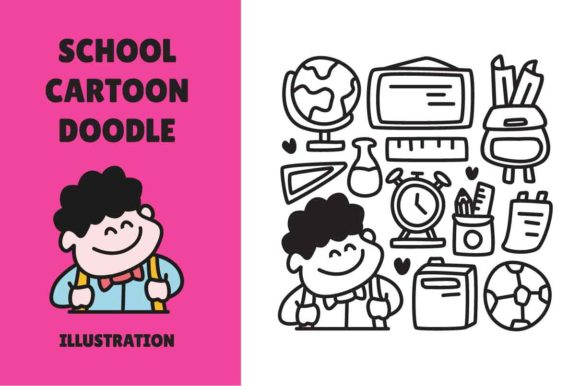
One of the most immediate applications of cartoon doodle back to school design is in coloring books and printable sheets aimed at adults. The repetitive, forgiving linework of doodles creates a low-stakes environment for relaxation. Educators preparing during summer breaks might use these pages as icebreakers in professional development workshops, allowing colleagues to reset before planning sessions. Freelancers managing irregular schedules find that ten minutes of doodle coloring between projects helps sustain focus without requiring intense concentration. The thematic connection to school motifs—like diagonally ruled paper or scattered erasers—adds a layer of nostalgic comfort that plain mandalas might lack. When selecting coloring assets, look for designs with varied stroke widths; thicker lines are easier to color on screen, while fine details work well in printed formats.
Background Patterns for Digital and Print Materials
Backgrounds featuring cartoon doodle back to school elements can elevate everyday documents. A newsletter for an educational nonprofit might include a subtle pattern of doodled chalkboards and rolling backpacks, reinforcing the theme without overwhelming text. For social media managers, a repeating doodle tile can serve as a consistent brand identifier across posts, especially when combined with a transparent overlay. In print, these backgrounds work well for flyers, workshop agendas, or product packaging aimed at parents or educators. However, keep in mind that highly intricate doodle patterns can compete with foreground content. For professional use, opt for designs with ample white space or customize the opacity to reduce contrast.
Strategic Use in Branding and Marketing
When integrated into branding, cartoon doodle back to school design for logos, symbols, and icons offers a cost-effective way to establish personality. A freelance curriculum developer might use a doodle of a smiling lightbulb as a symbol on her website, immediately signaling innovative learning materials. A small publisher of children’s books could adopt a mascot doodle for social media icons, creating a recognizable thread across platforms. The hand-drawn quality of these illustrations implies handmade attention to detail—a value many creators and small businesses want to emphasize. Because doodles are inherently scalable in vector form, they maintain legibility whether shrunk to a favicon or enlarged for a booth banner. Yet, for ventures targeting conservative B2B channels, consider using doodles as secondary accents rather than primary logos to preserve perceived professionalism.
Stickers as Engagement Multipliers
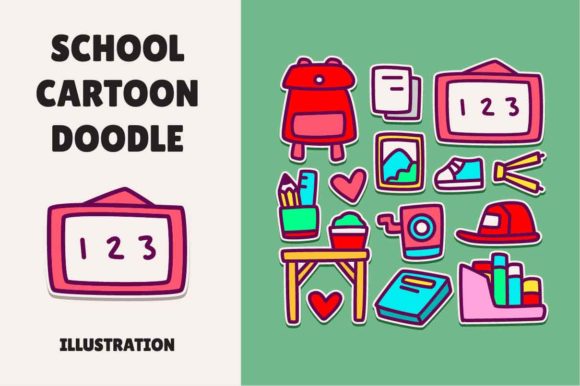
Stickers remain a highly tactile marketing asset, and cartoon doodle back to school sticker sheets extend this reach. A teacher-run online store might include free doodle stickers with each order of lesson plans, encouraging repeat purchases. Planners and journal users, a demographic common among creative professionals, often seek themed sticker packs to decorate daily spreads. For event organizers, doodle stickers with schoo l themes—such as a pair of glasses resting on a ruler—can be handed out at education conferences or back-to-school nights. The low production cost allows for experimentation: test a small batch of sticker designs with your audience before committing to large runs. The key is ensuring the doodle style matches your brand’s tone; overly complex sticker art may become illegible when printed in small sizes.
Icons and Symbols for Clear Communication
Icons derived from cartoon doodle back to school motifs simplify navigation and instruction. An online course platform could use a doodle of a stack of books to represent a library, and a pencil to denote a writing module, making interfaces more intuitive without relying on lengthy labels. In workshop materials, doodle symbols can categorize sections—a magnifying glass for research tips, a chalkboard for key examples. This visual shorthand saves time for users who need to scan documents quickly, such as busy educators or corporate trainers. When building icon sets, consistency is crucial: ensure all symbols share similar stroke weights, curve styles, and color palettes. If your project requires icons for highly technical concepts, supplement doodles with clean text rather than relying solely on whimsical imagery.
Who Gains the Most from These Design Assets
Several professional groups derive particular utility from cartoon doodle back to school resources. Independent creators—including bloggers, course designers, and Etsy sellers—often lack the time or budget for custom illustration; doodle asset packs provide a foundation that can be tailored through color tweaks or layout adjustments. Marketers in education-adjacent fields use these designs to differentiate from competitors who rely on stock photography; a doodle-based email campaign can achieve higher engagement through a friendly, unexpected aesthetic. Educators and counselors appreciate the dual role of these visuals: they can serve both as instructional aids in the classroom and as therapeutic tools during downtime. That said, fit matters. If your industry demands strict formality—like legal or medical correspondence—reserve doodles for internal communications or team-building materials rather than client-facing collateral. In hybrid contexts, pairing doodle elements with clean typography and minimal layout helps maintain a balanced tone.
For hobbyists such as scrapbookers or bullet journal enthusiasts, cartoon doodle back to school design for coloring, backgrounds, and stickers offers a low-risk way to explore creative expression. The pre-made nature of these assets removes the blank-page anxiety that often stalls personal projects. Instead of drawing from scratch, you can combine pre-existing doodle motifs to create custom planners, gift tags, or decorative wall prints. The limitation lies in originality—since assets are commercially available, identical designs may appear across multiple products. To counter this, consider mixing doodles from different sets or modifying colors and compositions to forge a unique visual voice.
Practical Tips for Selecting and Customizing Doodle Assets
To maximize the value of cartoon doodle back to school resources, start by clarifying your format and output. For screen-based projects like social posts or websites, SVG files offer scalability without quality loss. For printed items such as coloring books or sticker sheets, high-resolution PNG with transparent backgrounds is preferable. When reviewing collections, prioritize those that include multiple file formats and editable layers. Color versatility is another factor; a set with monochrome outlines allows you to apply your own palette, maintaining brand consistency. Test a single asset in a small project before committing to a full pack, especially if you need seamless tiling for backgrounds or uniform icon sets. Finally, watch for usage licenses: some doodle packs restrict commercial applications or require attribution, which can complicate professional use.
Blending Doodle Style with Broader Design Systems
The most effective use of cartoon doodle back to school design often involves pairing it with other visual elements rather than relying on it exclusively. A minimalist website can benefit from a single doodle hero image that breaks up clean lines without dominating the page. For a printed planner, combine doodle borders with serif typography to create a look that is both whimsical and readable. The contrast between the spontaneous feel of doodles and structured layouts yields a dynamic visual hierarchy. When used in coloring pages, suggest color palettes that match the intended mood—pastels for calming, bright primaries for energy. Avoid overcrowding a design with too many doodle elements; one well-placed symbol can communicate more than a chaos of scribbles. This selective approach helps preserve the impact of the doodle while fitting into the polished expectations of professional work.
The cartoon doodle back to school aesthetic is more than a nostalgic trend—it is a flexible resource that addresses real needs for creativity, productivity, and connection. By approaching these designs with intentionality, you can transform a simple school-themed doodle into a meaningful component of your creative or professional toolkit. Whether you are building a brand, relaxing through coloring, or simplifying instructional materials, the right doodle asset saves time while adding a layer of authenticity that audiences genuinely appreciate.